Sunday, July 20, 2014

Learning is Unique for Everyone!

Teachers have the responsibility of ensuring progress in academic standards, while still protecting and addressing the individual needs of students with disabilities. There were 87,233 students serviced with learning disabilities in the 2010-11 school year in the state of Colorado from ages 3 - 21.  This number continues to increase yearly and clearly indicates that learning is unique for all students.


Universal Design for Learning (UDL) seeks to improve instruction for all the needs of diverse learners by building flexibility into the curriculum.  This improved instruction includes a blend of technology capabilities that need to be readily available in schools.  Learning about the principles behind UDL and applying them can change perceptions among educators.  All students can benefit from teachers using this UDL model.  UDL training has impacted how educators viewed accommodations and their impact on all learners.  Specifically for general educators, UDL training influenced how they viewed the impact accommodations can have on all students. (Wyndham, 2011)
The technology tools available today provide a range of opportunities for teachers to meet the needs of diverse students within inclusive environments. Using the UDL framework provides students with more accessibility and opportunity for academic success. This broad framework focuses on building choice and flexibility within instructional practices that are used for all students.  Capitalizing on available current technology tools can help meet these goals.  UDL looks different in each classroom where it is implemented based on the strengths and needs of individual students. UDL is based in neuroscience and brain research and utilizes technology advances to improve instruction, but it is not a technology-only approach. Teachers without the latest technological tools in their classrooms can still embrace and apply a UDL approach.
The three key components of universal design for learning are: multiple representations of information, alternative means of expression, and varied options for engagement.
An example of using multiple representation of information would be captions on video or text for audio material as well as the use of video and animation to convey concepts. This is demonstrated in my video about getting ideas for student’s personal narratives.  I used the closed caption tool from YouTube’s editor to complete this process.  Examples of alternative means of expression include options to record oral speech, to draw, or to present ideas through a dramatic presentation. This is demonstrated in my presentation lesson of students telling of their story, retelling story and finally recording their story.  Students can be motivated if content, level of challenge, and the supported activities involve choice or can be changed. Effective feedback using formative and summative assessments can also provide multiple ways for students to see success, stay engaged and challenge their learning. Part of the lesson I developed adds the formative assessment of reflection by peers and by self to improve their story even before they begin to write.  
Universal design can enhance performance for all students in the classroom.  However, it can become a bridge for students with mild disabilities to participate on a more level playing field than peers who are more successful with printed text.  For students with severe disabilities, universally designed lessons can mean the difference between participation in the classroom setting and a pull out scenario.
    Rose, D., & Meyer, A. (2002). Teaching every student in the digital age:  Universal design for learning. Alexandria, VA: Association for Supervision and Curriculum Development.
    Wyndham, Scott M. (2010). School faculty perceptions of the use of technology to accommodate diverse learners: a universal design for learning framework pg. 197-212
      U.S. Department of Education, Office of Special Education Programs, Annual Report to Congress on the Implementation of the Individuals with Disabilities Education Act, selected years, 1992 through 2006, and Individuals with Disabilities Education Act (IDEA) database, retrieved May 12, 2013, from http://tadnet.public.tadnet.org/pages/712. National Center for Education Statistics, Common Core of Data (CCD), "State Nonfiscal


The Proof Is In The Pudding, The Planning and The Learning

Potential criticisms that may occur in implementing a Project Based Learning project might be that many may wonder whether project-based approaches can fit into an already packed curriculum and can successfully address national, state, and district standards.  Others may not understand and question how learning is somewhat dependent upon specific students, classroom and community in which the learning takes place and may wonder why your classroom activity looks unorganized and extremely active.
tea-timeblog.com
Addressing criticisms of PBL with excitement and enthusiasm is helpful, but giving critics data driven information should be the route to address criticism.   This data is also the rationale of why PBL involves effective instructional strategies that I will be implementing in my classroom next year.  
When addressing standards, the curriculum is just a tool for content and activities designed to meet standards. A well planned and carefully designed PBL project can meet the determined grade-level standards.  Teachers using PBL design and approaches correctly will make these projects meaningful and personal to the students.  There are connections created between project-based approaches and the world outside the walls of the classroom.  There are connections between the projects and other school lessons that integrate many other standards.  Classroom PBL design includes model listening and full group attention.  Effective approaches in collaboration requires the classroom teacher to model, support and carefully coordinate student’s collaborative groups.  These teachers incorporate the use of effective feedback and assessment for students and provide students will multiple opportunities to revise and reflect on their learning and work.  This produces significant learning gains.  Findings indicate that PBL, was superior in long-term retention, skill development and satisfaction of students and teachers.  The element of choice provides the engagement and the feedback promotes the learning.

   Duke, N. K., Brugar, K. A., Halvorsen, A.-L., Block, M. K., Strachan, S. L., Berka, M. B., & Brown, J. M. (October 22, 2012). Narrowing the achievement gap in second-grade social studies and content area literacy: The promise of a project-based approach. Theory and Research in Social Education, 40, 3, 198-229.
   Katz, L., & Chard, S. C. (Eds.). (2000). Engaging children's minds: The project approach. Stamford, CT: Ablex Publishing Corporation.

Sunday, July 13, 2014

You Can't Have Your Cake And Eat It Too! Teaching Scarcity to Students

Continuing down my Project Based Learning path, proved more difficult this week.  As an educator, ideas come easy to me, but specifics don’t always flow as quickly.  In PBL, however, not planning out specifics could mean an unsuccessful unit for your students.  But also as an educator, that has been trained in the teaching-learning cycle, I know the key is to go back to the standards of what kids need to know and plan accordingly.  So that is what I did.

When revisiting the Colorado Department of Education social studies standards, I found fabulous resources that helped me tremendously.  Colorado Personal Financial Literacy Expectations put things very simply for me.  I continued from there making sure the standard was being addressed.  Changing my title of my project to: You Can’t Have Your Cake And Eat It Too! gave me the emphasis on scarcity that I needed.  Scarcity could actually be a theme for the entire year in a classroom because you can cover many standards you need to teach in science and social studies and still be incorporating the term scarcity.  Whether it’s scarcity of water, food, technology, or goods and services, it can all apply to our teachings.

The next resource that helped me was the Colorado Council for Economic Education.  This resource has many tools available for educators for all ages.  They are solid lessons and some are even interactive.  

This week, I will share my Tools and Resource page for my financial literacy PBL project as well as my Project Timeline created with lucidchart.  I'm enjoying the lucidchart chrome extension the more I use it.

mind mapping software

Sunday, July 6, 2014

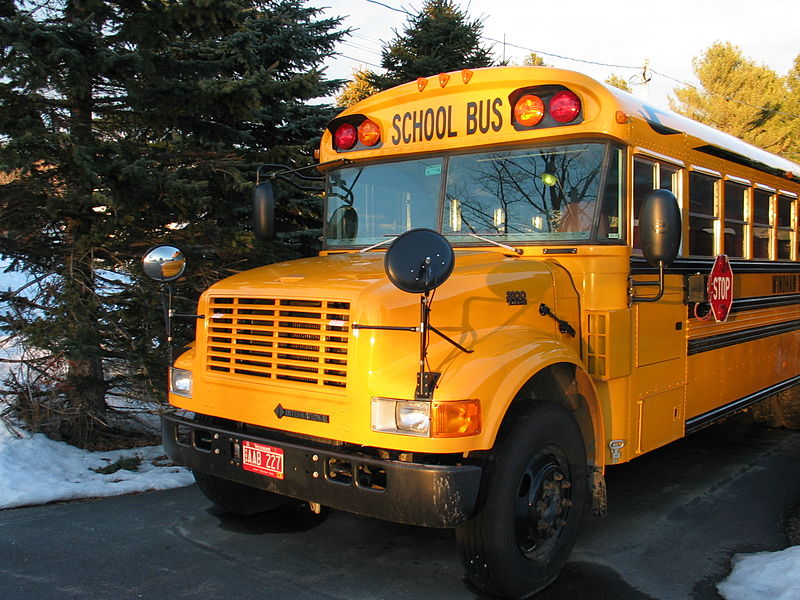
Assessments Drive the Bus for PBL

From Wikimedia Commons
One of the main goals of formative assessments with Project Based Learning is to drive future learning.  The summative assessments will show understanding of content, application and new learnings.  But who drives the bus? Formative assessments drive the bus! Students participating in various forms of this type of assessments will be guided and the teachings can meet needs of the learner.  Personalizing this guided learning can be beneficial for all students.


Assessments in project based learning should include both formative and summative assessments.  Assessment formats should be varied. Self assessment/reflections and peer assessments are essential when learning to effectively work together and share learning. Also, it's imperative that students know expectations of final rubric and even more beneficial if they participate in the creation of the rubrics.


Immediate and direct feedback could be the difference between a successful journey on the bus and a project going nowhere. Improvement on work needed, additional skills needed, and additional content and direct instruction taught could be provided by the guidance of the teacher with the right formative assessment tools. Again using this feedback can drive the bus right into a successful journey.


Both formative and summative assessments should:

  • provide the opportunities for student reflection on learning
  • provide feedback from other people besides the teacher - students, other teachers, community members, and/or administration
  • occur throughout the project
  • provide clear criteria for the project before work begins
  • provide the opportunity for revision and improvement of work
  • use a variety of formats, methods, or tools for assessment
  • must test standards

http://comeniusassessment.wordpress.com/


Sunday, June 29, 2014

Driving question for Problem Based Learning

In the What is Project Based Learning (PBL)? article on BIE.org, an essential element for Project Based Learning is the driving question.  This question will be understandable, engage the learning as well as connect to content standards.  

In the Driving Question element of the Project Design Rubric found on BIE’s website, these indicators are listed for best PBL practices in a project:
  • The driving question captures the project’s main focus.                
  • The driving question is open-ended, it allows for more than one reasonable, complex answer.
  • The driving question is understandable and inspiring to students.
  • To answer the driving question, students will need to gain the intended knowledge, skills, and understanding.
My overview of Spending, Saving and The Rainy Day explains my driving question and my subquestions.  My purpose is that the children discover an importance of financial literacy and go out into the world and share their knowledge to parents, important community members, the Rotary Club and the Colorado Department of Commerce to increase awareness.  The focus of this entire project is Financial Literacy.  The driving question should embed the focus of the project.  

http://401kcalculator.org
In my project, the essentials of PBL are incorporated within this driving question and subquestions.  There is a need to know about financial literacy and our spending and saving habits.  These are life skills.  There is a purposeful and authentic audience as I've chosen various platforms to share our PSAs.  Every year, Junior Achievement comes into our school for one day and does an incredible job in the teaching of financial literacy.  When I was thinking of our project, I wanted something that didn't just have to end.  This project could be continued at various levels depending on the opportunity the message gives these students to continue with it.  
In 2nd grade, students still need background knowledge and explicit expectations of team-work, inquiry, as well as a decision making process.  So the subquestions, or mini-lessons that I will need to teach are important in the development of our classroom community.  I believe that this project will encourage inquiry and excitement as they discover the virtual money world around them.  The 21st Century skills will go hand and hand with this project as they are researching and discovering how computers has changed the financial world.  
Here is my driving question:  Is saving money important to my future?
But I am thinking about changing it to:  What should we spend our money on?

All subquestions relate to both.  However in thinking about the students learning about production, good and services, etc... and reading an article about buying in America, made me wonder about the children. Do they need to be thinking about their spending as much as their saving.  Also, I could get into other countries when looking at production and practices, advertising, etc.  I think that there is more of a story with the 2nd question.  But I would like to keep them both.

Sunday, June 22, 2014

Project Based Learning - Exploration - Financial Literacy

After the definition of PBL has been established, I found myself  practicing modified versions of this great process and missing out on some details of it.  It is important for us to teach students to  meet the standards and our approach to teaching can be enhanced using Project Based Learning.  The importance of including all the essentials of this style is equally important.  


This year when working on the social studies, Financial Literacy, I determined that this topic was quite interesting to my students and valuable to them as well.  So as I researched the PBL Units, I found lots of interesting projects that involved financial literacy in the upper grades, but few in the primary grades.  One lesson I found was how High Schoolers Teach Students How To Save and that looked like parts could be used in a great PBL project for my 2nd graders.  Edutopia’s article on Financial Literacy for Elementary Students had some valuable resources as well.

After researching many ideas across the web, I could see many included the essentials needed to complete the whole process that PBL encumbers, but I didn’t find exactly a project to fit my purpose.  We have always been a part of Junior Achievement at our school.  Their information and materials were exactly what my students needed.  I would like to develop a project that would make more impact than just one day in a classroom.  
Source: http://www.cashnotesale.com/

My questions were varied and could include:  
  • What goods and services do you use?
  • How are resources used in various communities?
  • What are some ways to find out about the goods and services used in other communities?
  • How do individuals make and analyze the consequences of financial decisions?
  • How do individuals meet their short- and long-term goals?


Upon reading Making a Case for Financial Literacy, then  finding a great project design tool from BIE.org, and a planning calendar, I am ready to begin my planning.


Other Instructional Resources:
• www.jumpstart.org  Jump$tart Coalition website, Clearinghouse
• www.nefe.org  National Endowment for Financial Education
• www.cee.org  Council for Economic Education
• www.ja.org  Junior Achievement
• www.federalreserveeducation.org  Federal Reserve ( Piggy Bank Primer)
• www.mymoney.gov  US Dept. of Treasury/ US Financial Literacy & Edu.
• www.usmint.gov  US Mint
• www.savingsmatterss.dol.gov  US Dept. of Labor